Engineering systems. Building real things.
Robotics • IoT • Automation • Technology & Management
11th-grade student focused on embedded systems, robotics, and IoT development. Building autonomous systems, sensor fusion, and hardware-software integration using Arduino and ESP32. Preparing for Mechanical Engineering studies with emphasis on control systems and embedded design.
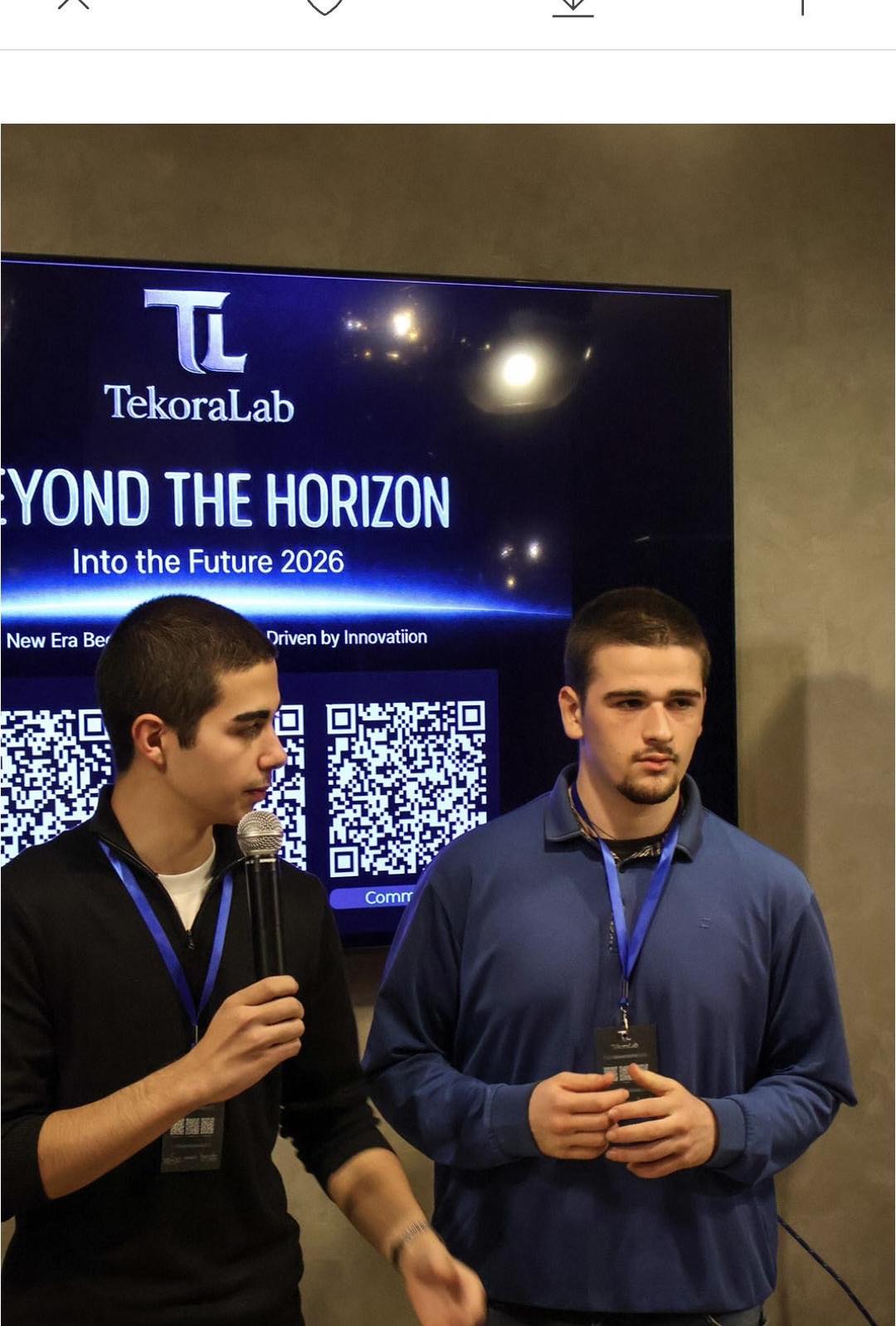
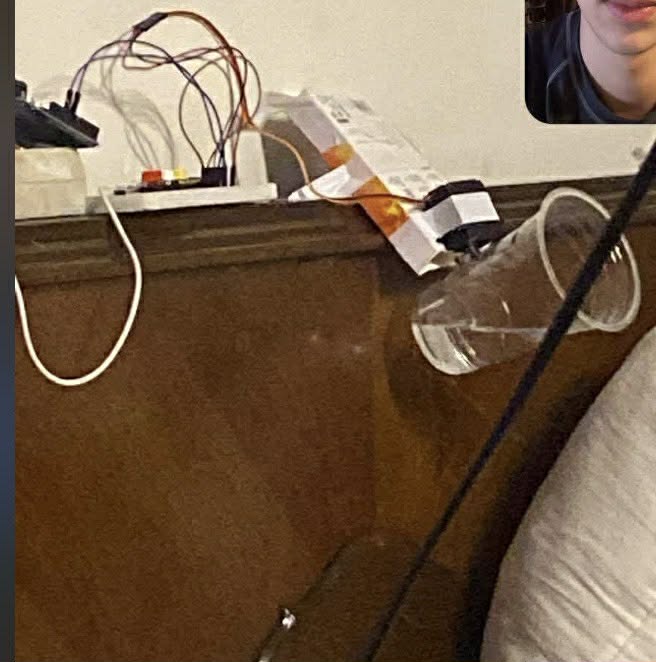
Automated timing system with mechanical actuation
Problem: Sound alarms are ineffective for waking. Solution: Built servo-actuated water dump system triggered by DS3231 RTC at scheduled times. Implemented power isolation between controller and servo to prevent resets. Result: Reliable mechanical wake-up system with zero false triggers over 30+ day test period.
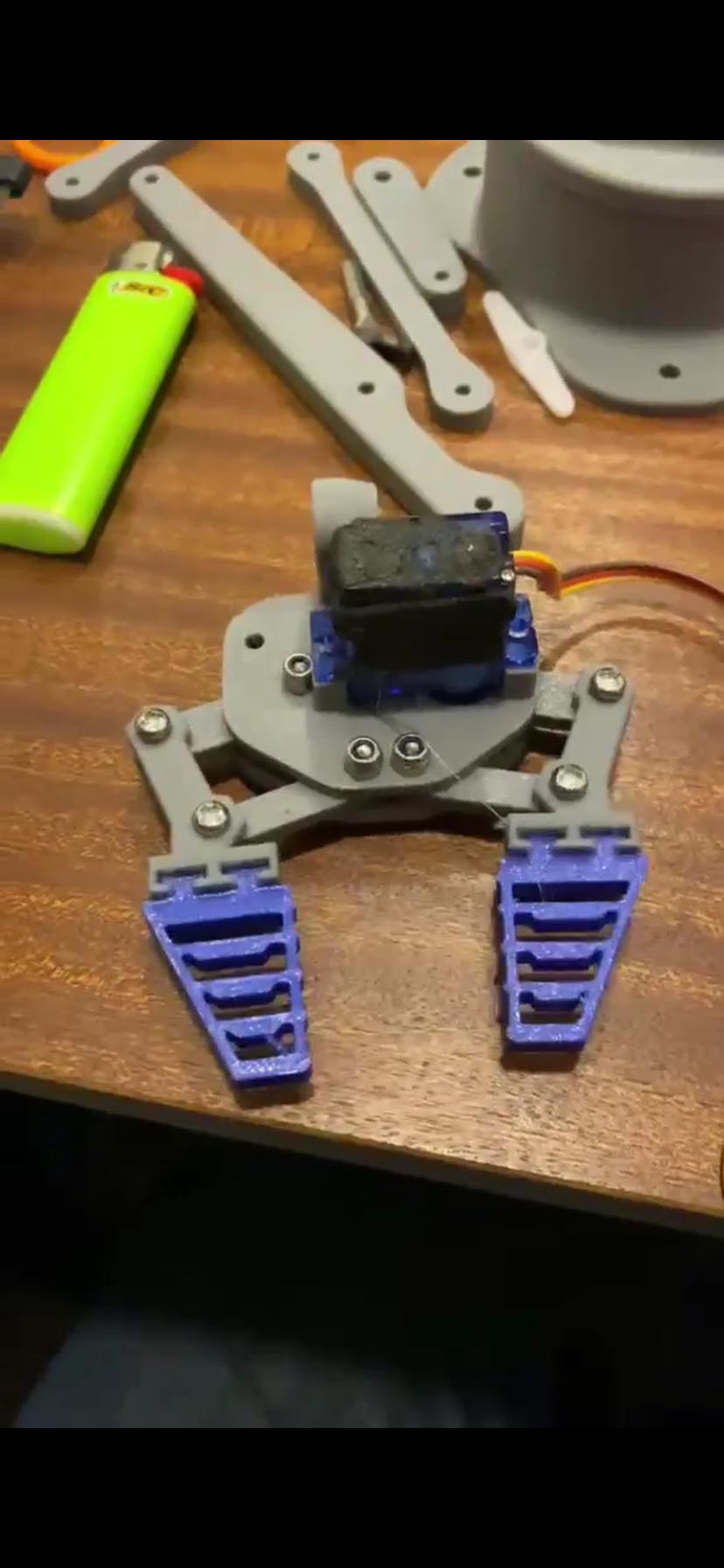
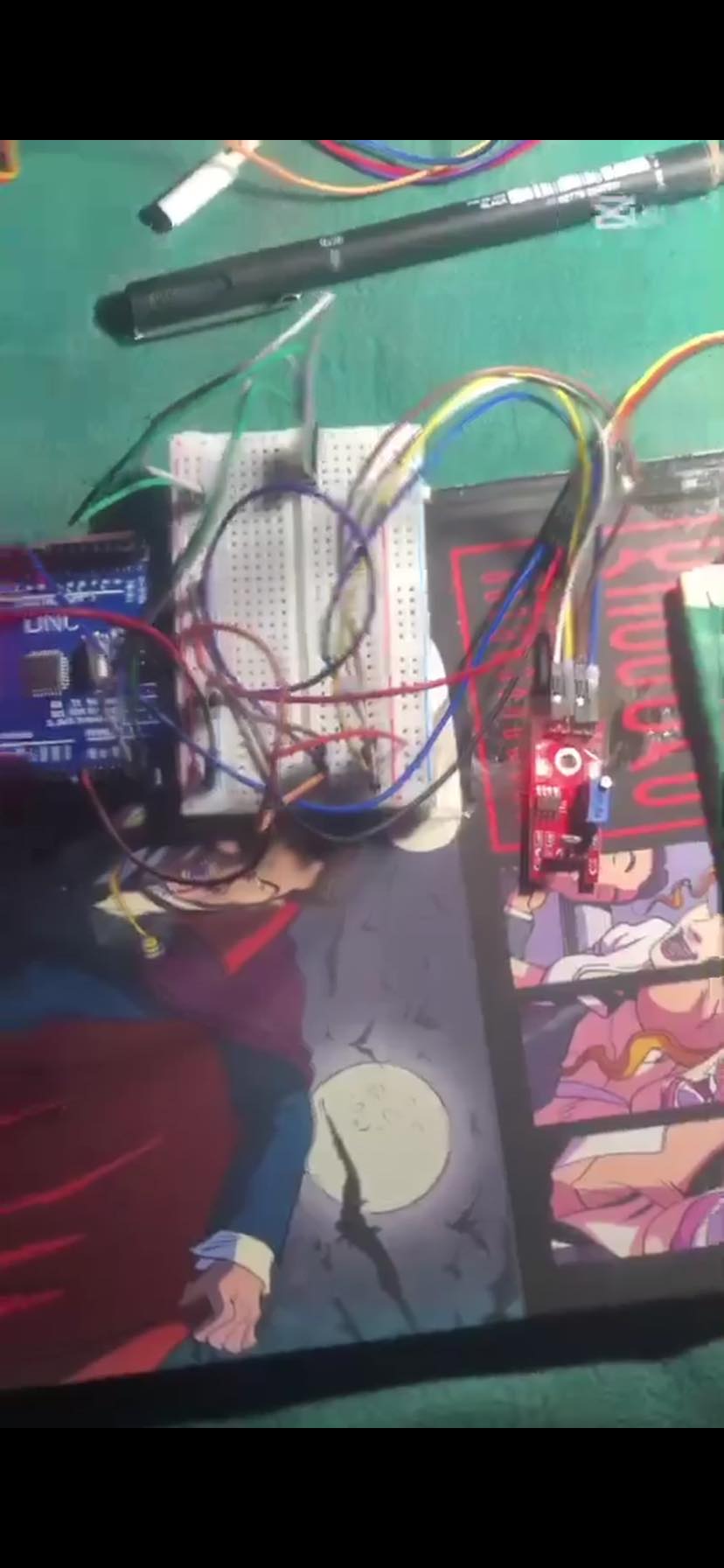
Mechanical system with coordinated multi-servo control
Problem: Need precise multi-joint manipulation with coordinated motion. Solution: Designed 3D-printed joint assembly with hard angle limits, implemented calibrated control logic mapping grip states to coordinated servo positions. Result: Claw successfully grips objects 2-8cm diameter with repeatable positioning accuracy within 3mm.
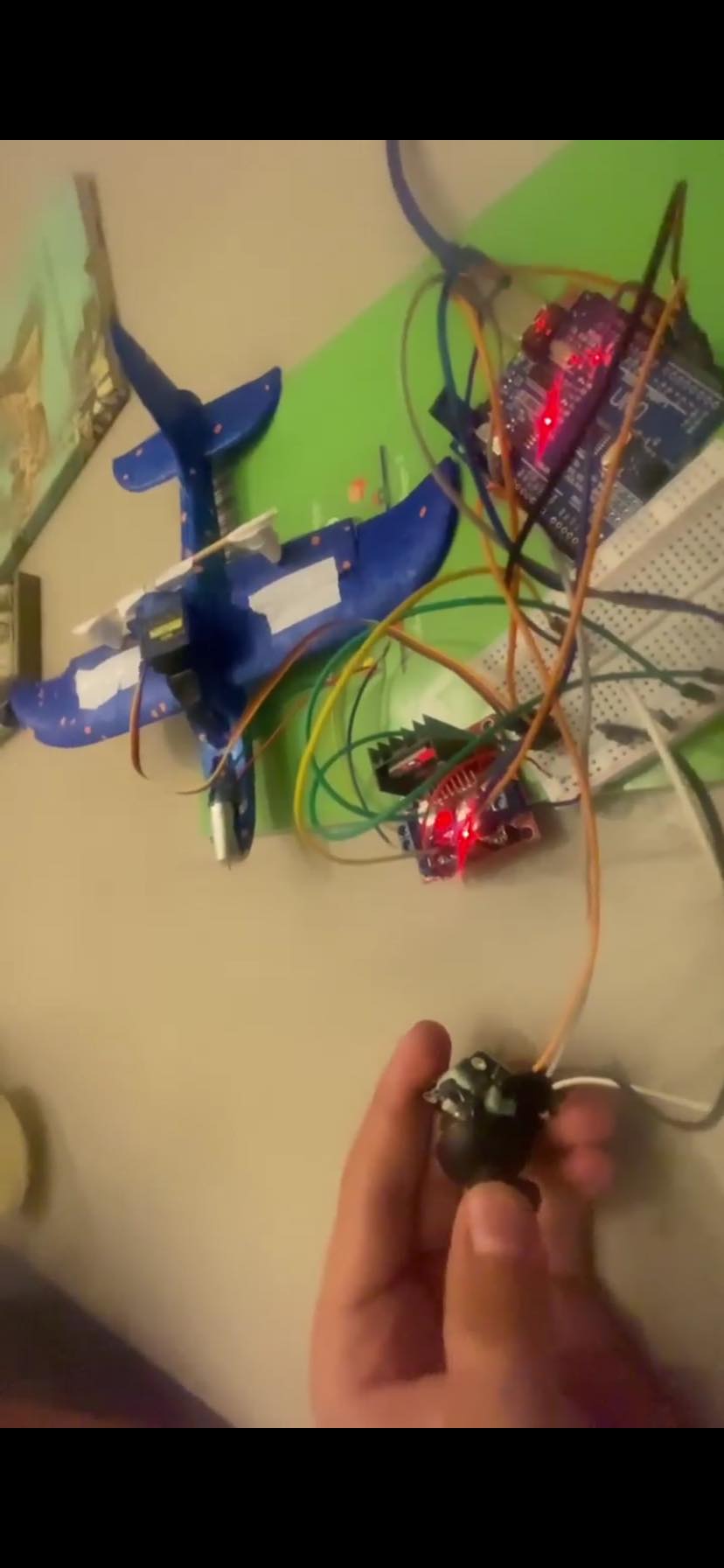
Sensor fusion system for stable autonomous flight
Problem: Maintain stable flight using noisy sensor data. Solution: Implemented IMU-GPS fusion algorithm with noise filtering, developed control logic mapping sensor state to control surface adjustments with safety constraints. Result: Achieved 45+ seconds of stable autonomous flight with <2° orientation deviation from target heading.
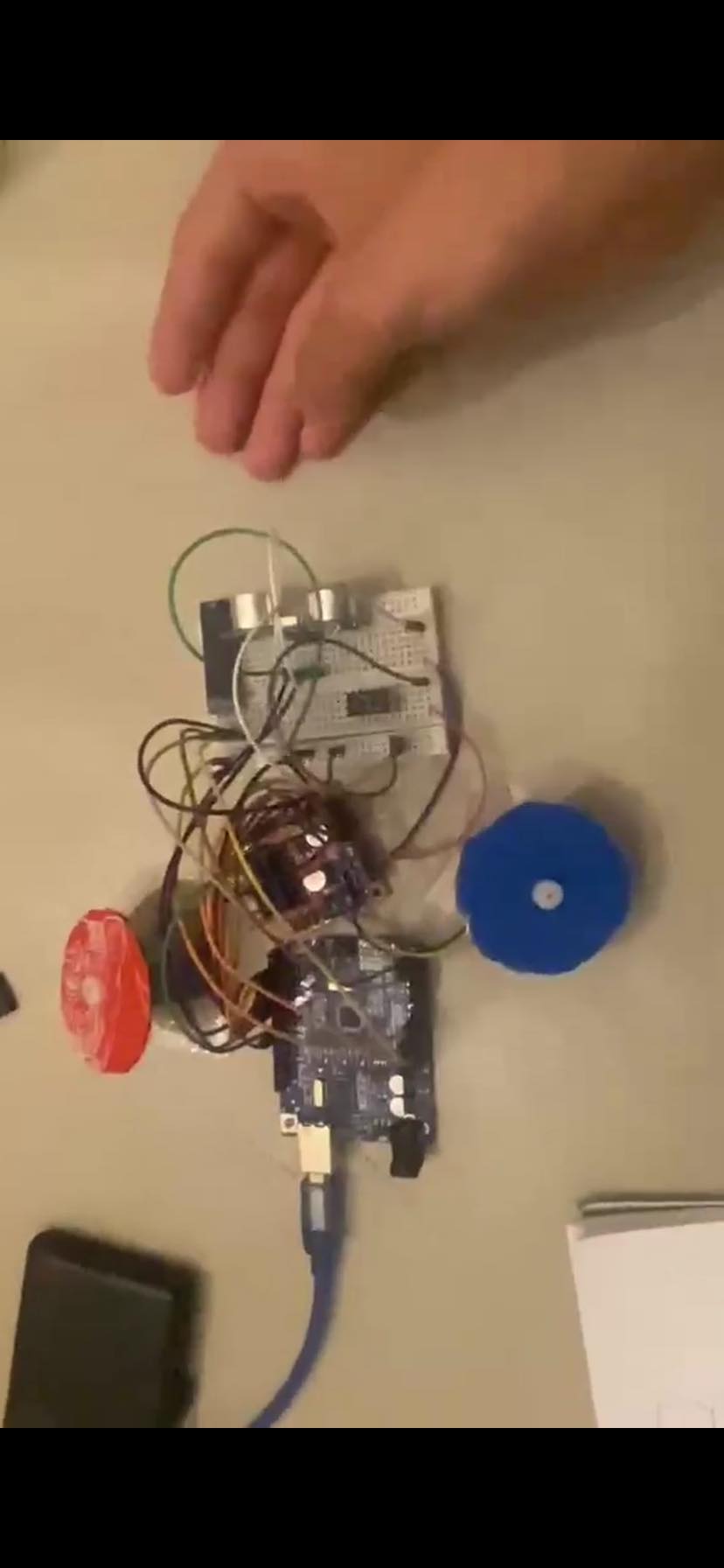
Autonomous navigation with closed-loop control
Problem: Navigate unknown environment while avoiding obstacles. Solution: Implemented decision logic processing HC-SR04 ultrasonic data with noise filtering, developed closed-loop control system adjusting motor speeds based on distance thresholds. Result: Vehicle successfully navigates 10m×10m test area with 95% obstacle avoidance rate, handles surfaces at angles up to 45°.
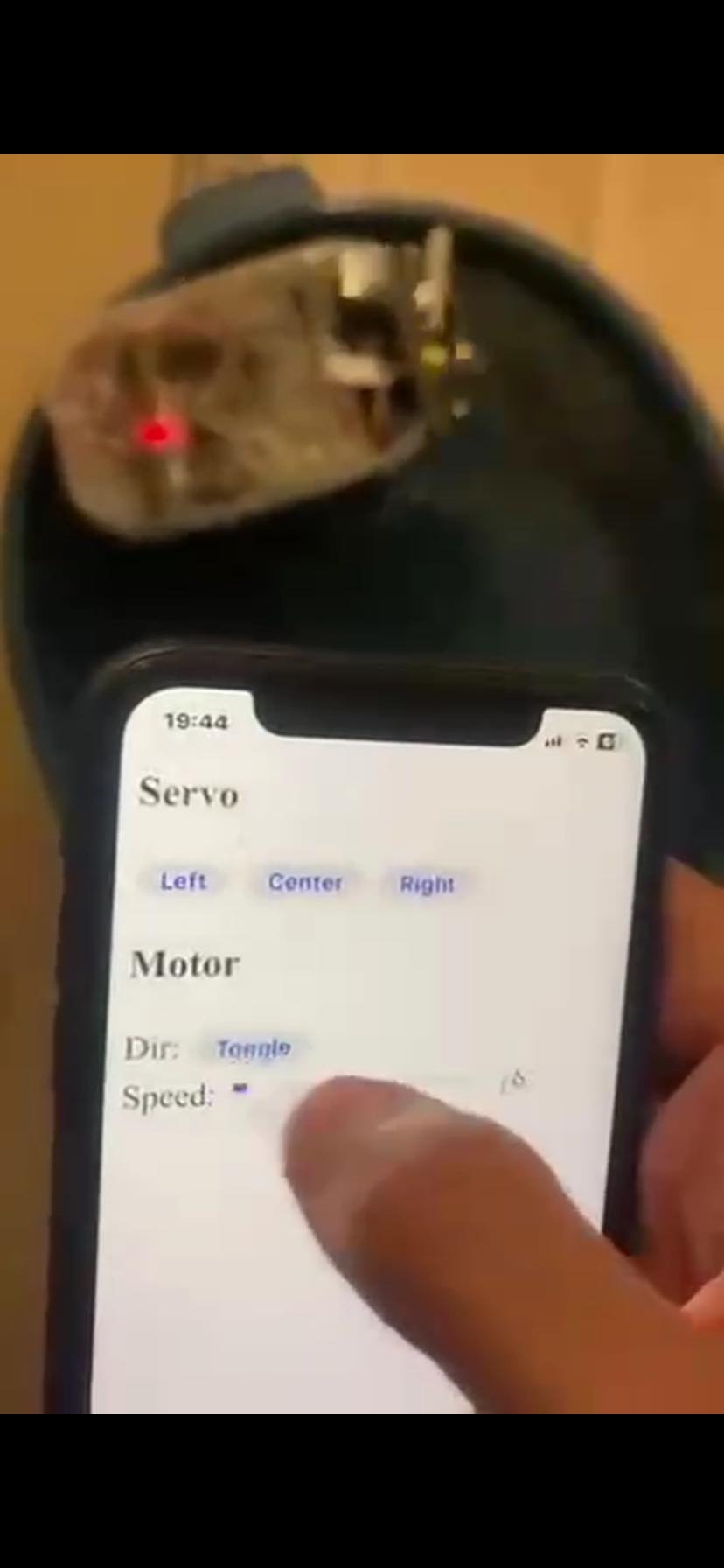
End-to-end IoT control system with web interface
Problem: Remote control of watercraft without dedicated radio hardware. Solution: Built ESP32-based web server hosting control interface, implemented motor driver control with watchdog timeout for safety. Result: Real-time control with <50ms latency, system handles connection loss gracefully with automatic stop after 2s timeout.
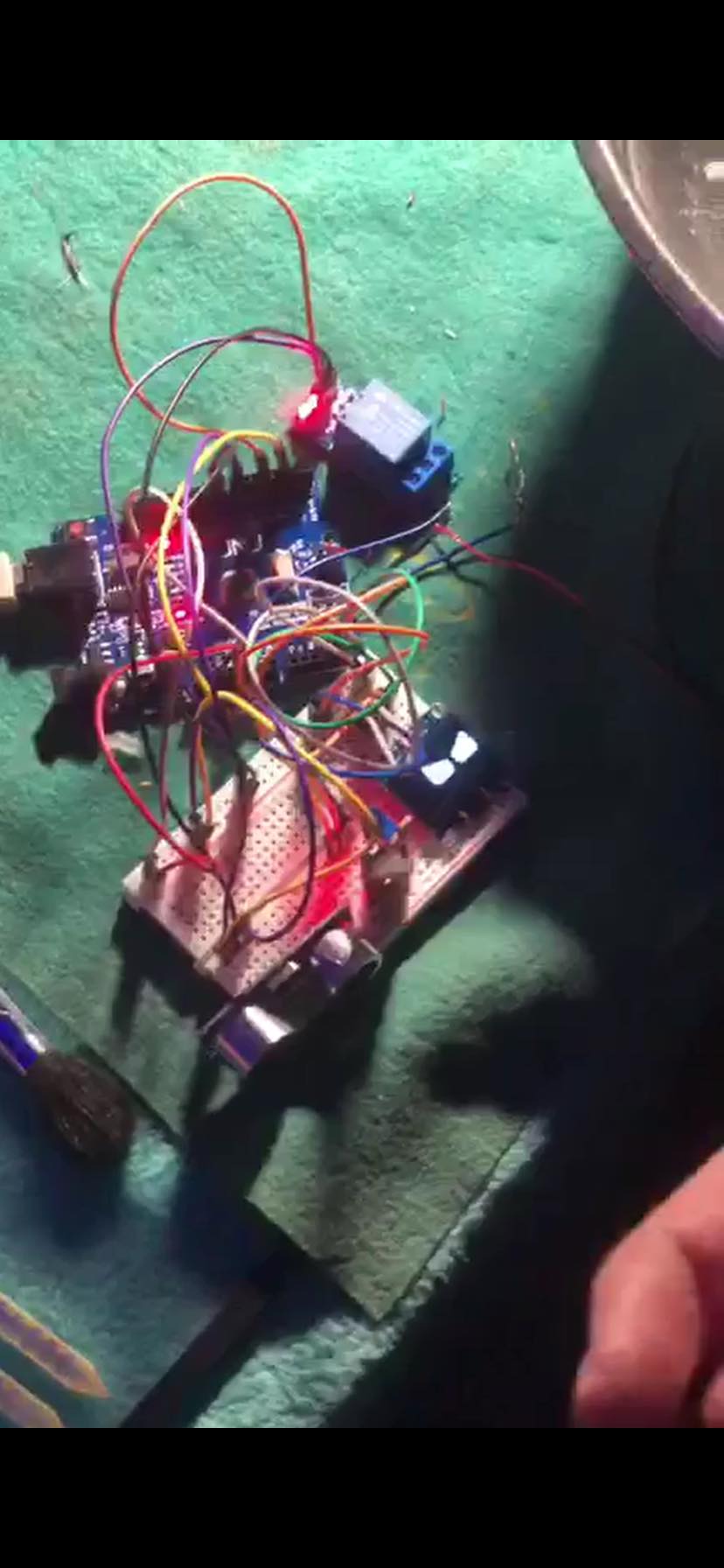
Secure access control system with fail-safe defaults
Problem: Remote door control with security and reliability requirements. Solution: Implemented ESP32-based control system with relay switching, authorization logic, and electrical isolation between controller and lock mechanism. Result: System operates 24/7 with zero controller resets, fail-safe defaults ensure lock opens on power loss, authorization prevents unauthorized access.
Automated Wi-Fi protocol analysis system
Problem: Understand Wi-Fi security protocols and password strength in controlled environment. Solution: Built fully automated system using ESP8266 for management frame generation and Python scripts for packet capture, analysis, and password testing. Result: System successfully analyzes reconnection behavior, tests 1000+ password combinations per hour, identifies weak passwords in test networks.
Hardware / Cybersecurity / AI — Real-time WiFi and Bluetooth threat detection
Problem: Need real-time visibility into WiFi and Bluetooth threats on a network. Solution: Built SENTINEL for a cybersecurity & AI hackathon — ESP32 promiscuous sniffing and BLE scanning feed a Flask/Groq AI pipeline with a live dashboard. Result: Detects deauth attacks, evil twins, randomized MACs, and unknown devices with plain-English AI threat analysis updating every 5 seconds.
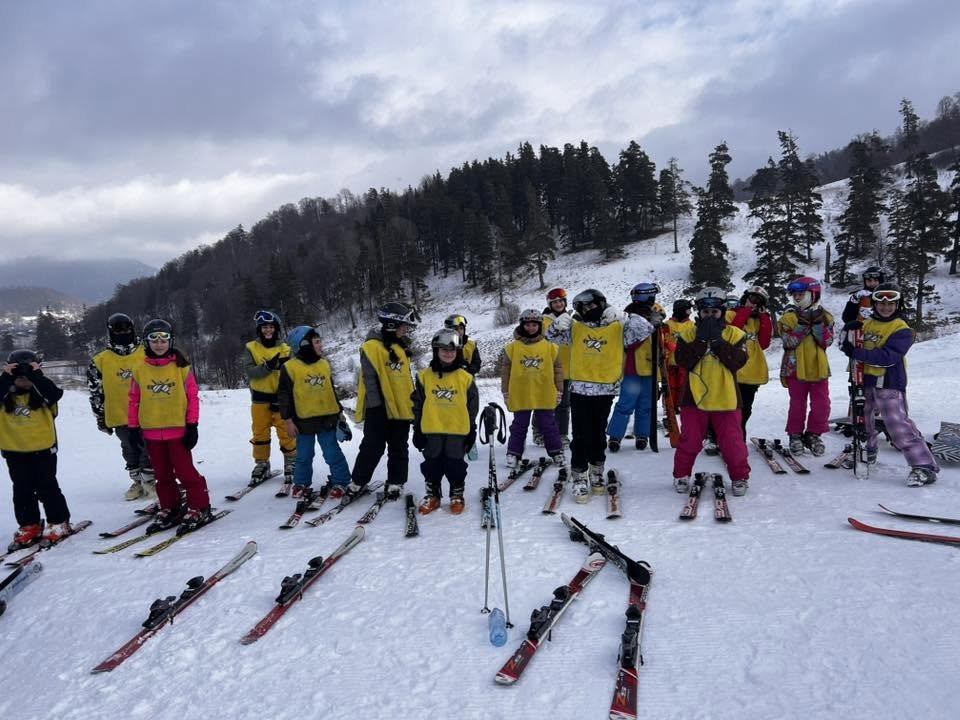
Signal processing pipeline for optical vibration-to-audio recovery
Problem: Recover audible sound from vibrations picked up by a laser reflected off glass, with no direct audio hardware involved. Solution: An ESP-based sensor rig samples photodiode vibration data at 2.5kHz and logs it as CSV; a Python pipeline removes DC offset, smooths high-frequency noise, applies automatic gain control, and reconstructs a normalized WAV file. Result: Successfully reconstructed a recognizable audio recording entirely from laser-detected glass vibration.
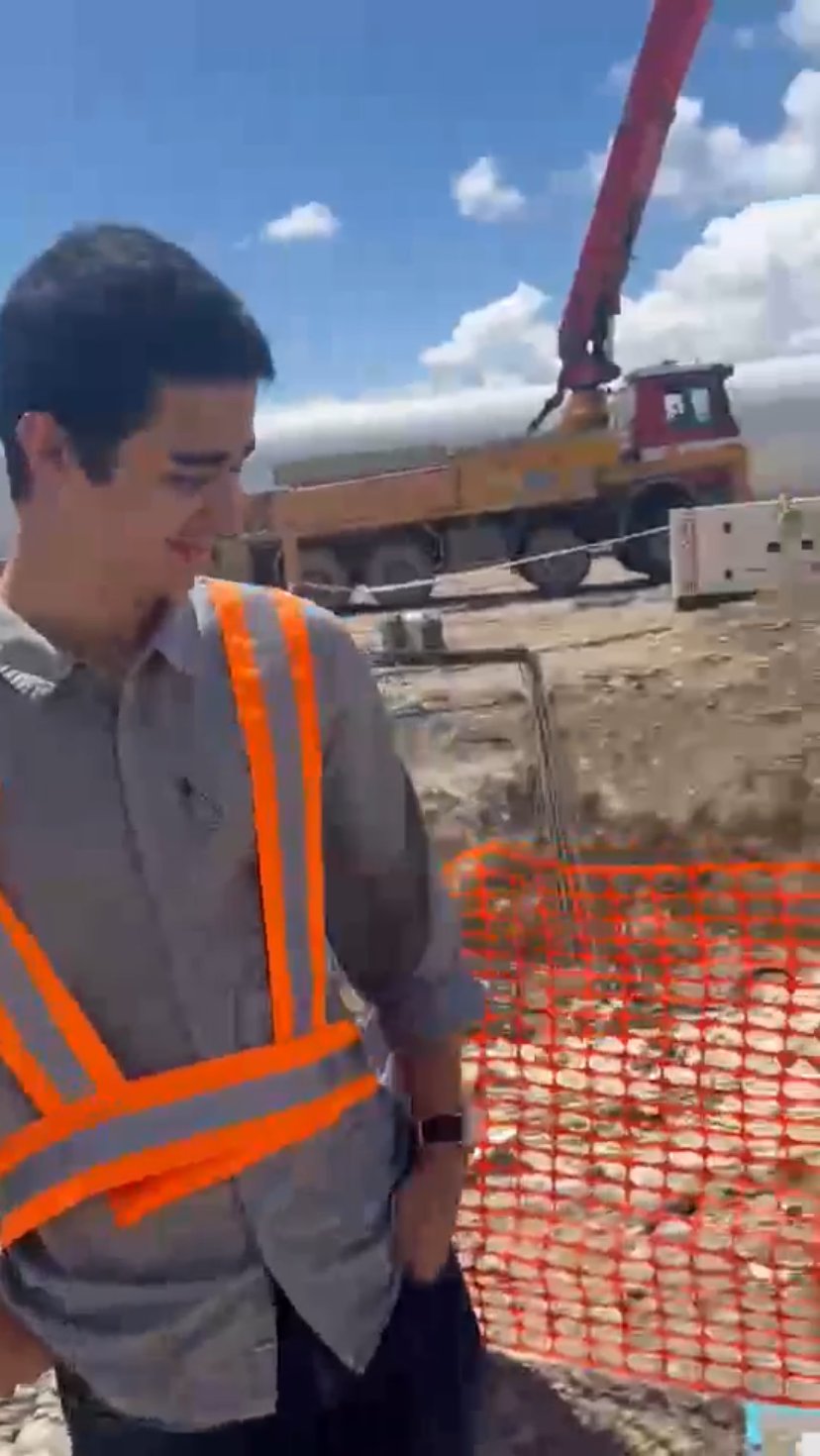
BLE LED control system with screen and audio reactivity
Problem: Off-the-shelf BLE LED strips only support static colors or built-in effects through a vendor app — no way to make them react to what's actually on screen or playing through the speakers. Solution: Reverse-engineered the ELK-BLEDOM/BLEDOB BLE GATT protocol (raw command frames for power/color/brightness) with automatic write-characteristic discovery, then built two reactive modes: screen-sync samples the primary monitor, computes a saturation-boosted mean color, and scales brightness by luminance; music-react captures system audio via WASAPI loopback, computes RMS with a decaying peak for adaptive gain, and maps it through a sensitivity-curved brightness envelope. Result: The strip syncs to on-screen content and audio in real time over Bluetooth LE, with exponential smoothing to prevent flicker and live color override via stdin.
Touchless viewport control via webcam hand tracking
Problem: 3D/CAD viewport navigation (pan and zoom) normally requires a mouse, which breaks flow when a touchless interface is preferable. Solution: Built a webcam hand-tracking controller using MediaPipe-based hand detection. A closed fist held while moving translates hand displacement into a simulated middle-mouse-button drag — the standard pan gesture in 3D viewports — scaled for responsive panning. Thumb-to-index pinch distance drives zoom: closing past a threshold sends a boosted zoom-in keystroke burst, spreading past a threshold sends a zoom-out keystroke, both rate-limited to prevent runaway zooming. Result: Functional touchless pan/zoom control validated against a live webcam feed with an on-screen hand-landmark overlay for debugging.
Computer vision system for real-time head-pose-based focus tracking
Problem: Phone use during focused work sessions is easy to fall into and hard to self-police. Solution: Built a webcam-based focus monitor using MediaPipe Face Mesh landmarks and OpenCV solvePnP to estimate real 3D head pose (pitch/yaw) against a generic face model, classifying sustained downward gaze as phone usage. Result: Triggers an escalating audio alarm after a configurable down-gaze duration, with EMA-smoothed angle tracking that tolerates blinks and brief detection dropouts without false resets.
Event-driven web system with performance-aware rendering
System: Vanilla JavaScript architecture for interactive portfolio. Inputs: User events (mouse, scroll, intersection), DOM state. Processing: Event-driven state machine, Intersection Observer API for viewport detection, requestAnimationFrame for 60Hz updates, state-based animation control. Outputs: DOM updates, canvas rendering, CSS transforms. Design decisions: Vanilla JS to avoid framework overhead, intersection-based lazy loading reduces initial parse time by 40%, animation frame throttling prevents jank. Constraints: Single-threaded execution, 16.67ms frame budget, memory-efficient state management.
Robotics / Hardware
Built an autonomous 3D-printed sumo robot for the Georgian Robotics Championship (Mega Sumo category). Designed the chassis in Fusion 360 with structural simulation, optimized for maximum pushing force and low center of gravity. No remote control — fully autonomous combat logic.
Mobile App / Startup
Event discovery and creation platform for the Georgian market. Tbilisi's event scene had no centralized infrastructure — no ticketing, no discovery layer, no data. Spotly lets venues post events and users find and attend them, with QR ticketing, map view, role-based access, and a Telegram moderation layer. Stack: Flutter + Firebase.
Marketplace / Concept
Machinery rental marketplace for Georgia's construction sector. Small contractors couldn't afford to own heavy equipment; owners had machines sitting idle. Designed the full platform architecture and marketplace flow to connect both sides. Shelved after identifying a structural disintermediation risk post-validation.
B2B SaaS / Mobile
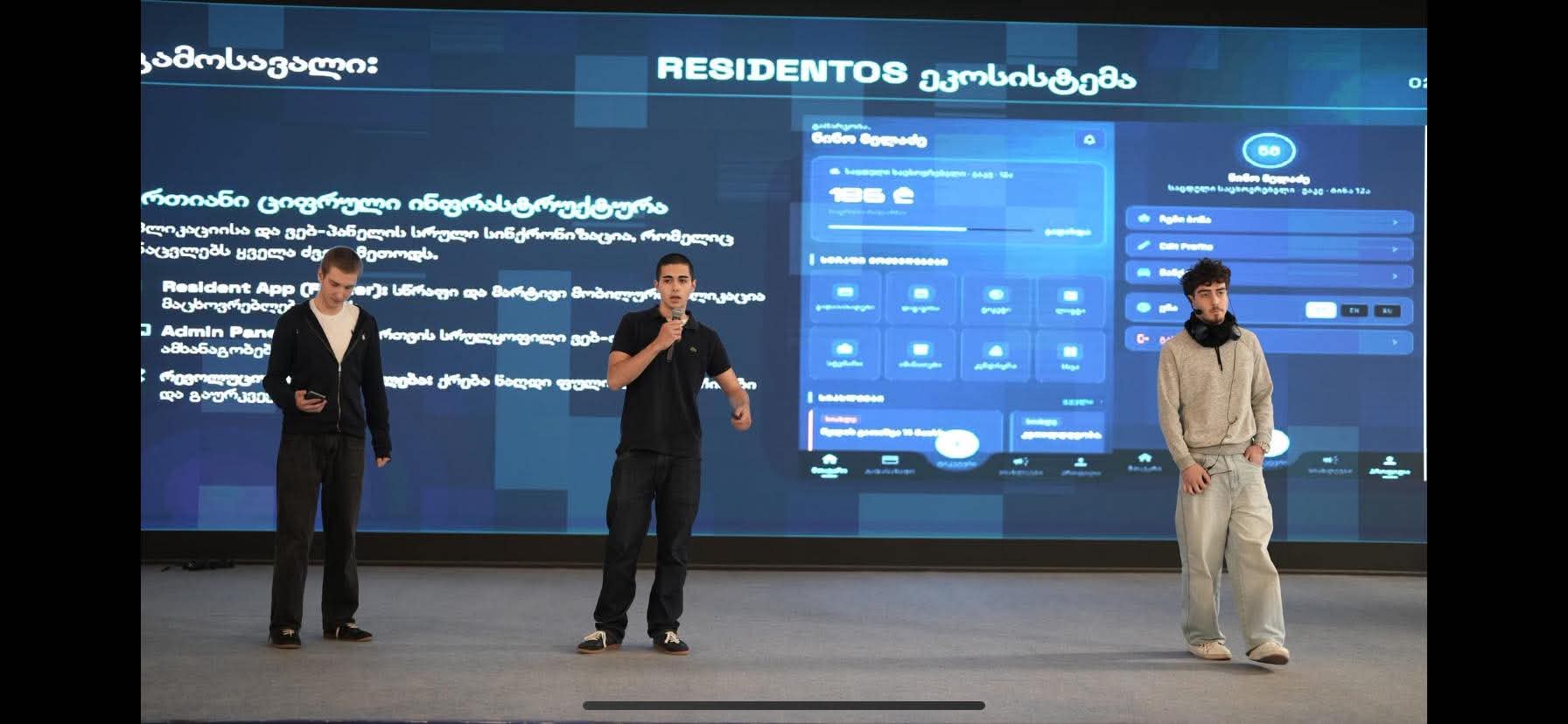
Property management platform for Georgian apartment complexes. Buildings run on WhatsApp groups, cash payments, and plastic fobs — no system, no data, no control. ResidentOS fixes that with a resident Flutter app (bill payments, maintenance tickets, visitor QR codes, lift/barrier access, announcements, parcels, marketplace) and an admin web panel for building managers. Monetization: per-unit monthly fee. Stack: Flutter + Firebase. Moat: hardware integration for lift and barrier access creates switching cost lock-in.
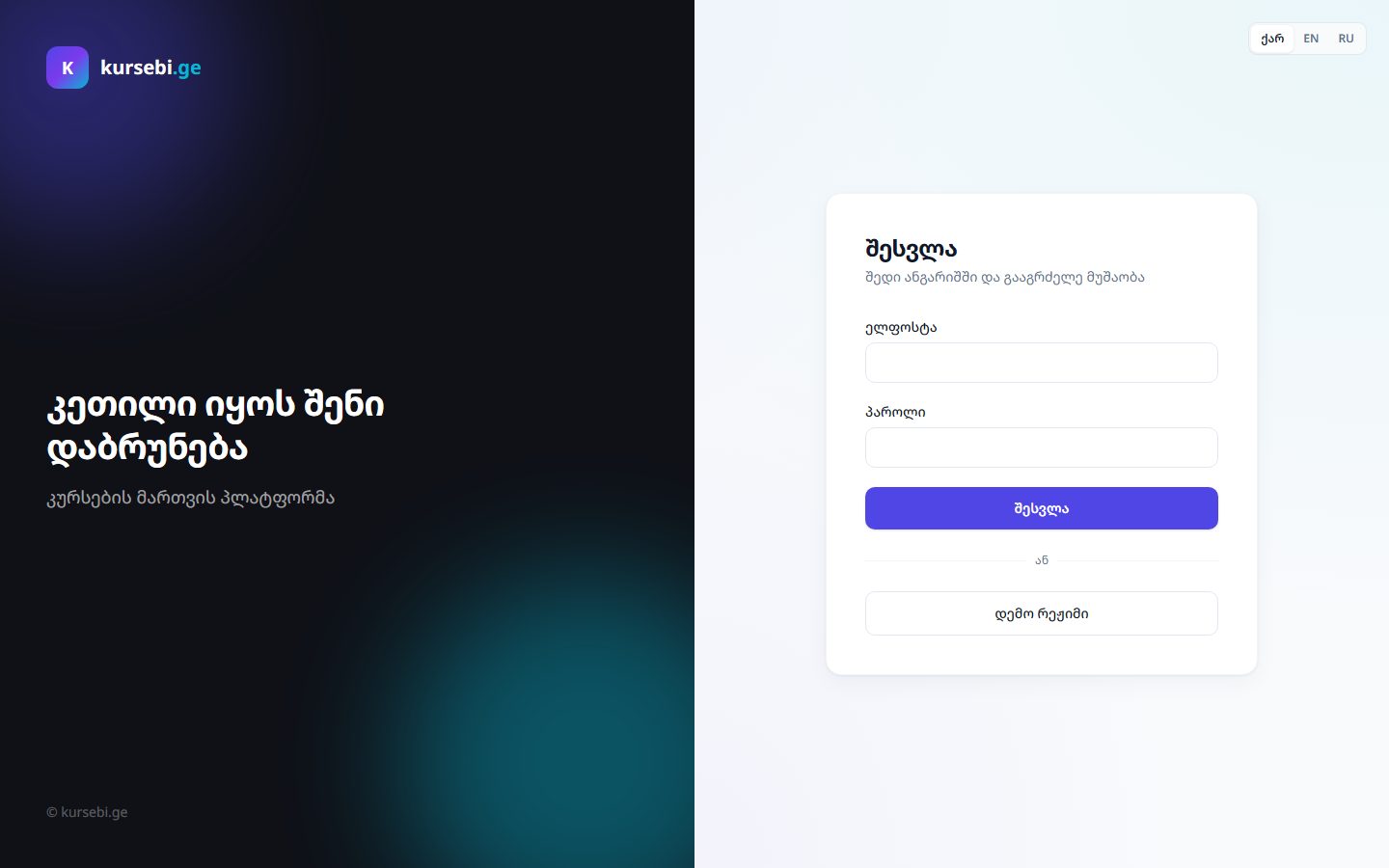
Tutoring Center Management SaaS
Tutoring center management SaaS for the Georgian market. Replaces notebooks, Excel, and WhatsApp chaos for small tutoring centers. Features student management, payments, schedules, and WhatsApp reminders — fully bilingual (Georgian/English). Website: kursebi.ge
AI-powered room renovation platform for the Georgian market
Photograph any room and visualize it renovated with real products. AI mode uses Gemini Vision + fal.ai inpainting; Manual mode silhouettes every renovatable element with YOLOv8-World, SAM2, and SegFormer — tap objects to browse matching catalog items scraped from Georgian retailers. In development.
Marketplace / Web App
Peer-to-peer classifieds marketplace for the Georgian market. Buying and selling used goods locally meant scattered Facebook groups with no trust layer — no seller accountability, no structured categories, no fraud protection. BRUNI fixes that with structured listings, AI-powered category and phone-spec detection, an in-app chat-based offer system, VIP promoted listings, and an admin panel for reports, bans, and promo codes. Stack: Next.js 15 + Firebase, deployed on Cloudflare.
Personal Project / Web App
Personal movie and TV streaming site built on top of the TMDB catalog. Browse trending, popular, and top-rated titles, watch via an embedded player with auto-fetched subtitles, and keep a synced watch history, favorites, and community ratings backed by Cloudflare KV. Deployed on Cloudflare Pages with a Workers-based subtitle proxy.
Mobile App / Cross-Platform
Fantasy football trading card game where users collect, trade, and manage player cards across seasons. Cards drop in five rarity tiers (Common to GOAT) with scarcity rules, a tier-based marketplace, scheduled trade windows, and real match-stat performance tracking that drives card value. Cross-season ownership adds sell/keep decisions and value decay, with an XP and ranking progression layer. Monorepo: React Native/Expo mobile app + React web app sharing a Firebase/Supabase backend.
Web App / AI
Real-time political debate platform: a quiz places users on a political spectrum, a matchmaking queue pairs them with their ideological opposite, and they debate live while an AI judge scores the exchange. Built on Socket.io for real-time matchmaking and session state, with the Anthropic Claude API generating debate topics and judging arguments, plus an ELO-style leaderboard.
Mobile App / Marketplace
Booking app for professional cleaning services in Georgia — normal home cleaning, general cleaning, and post-construction cleaning with real-time price calculation as you type. Auto-fills booking forms from the user's account, confirms bookings to Firestore, and supports English, Georgian, and Russian with light/dark themes. Built to get a booking done in under 60 seconds with instantly understandable pricing.
Quant Research / Trading System
Research and paper-trading pipeline for 30-second price-direction prediction on a single liquid instrument (BTCUSDT by default). Implements strict no-leakage feature engineering, walk-forward validation, probability calibration, realistic execution-cost modeling, and guardrails against data-quality issues and regime shifts, ending in an event-driven backtester and a live paper-trading loop over Binance's websocket feed.
AI Desktop Assistant
Windows desktop AI assistant built around Google Gemini for reasoning, chat, and vision, with a PyQt6 terminal-style HUD, push-to-talk and continuous speech input, and Edge TTS for spoken replies. Executes real actions — browser control, app launching, Gmail, clipboard, notes, web search — by parsing JSON action blocks from model output, with webcam and screen-capture vision, persistent long-term memory extracted from conversations, and ambient check-ins driven by foreground-window activity.
Computer Vision / Game Development
First-person 3D endless runner controlled by full-body motion capture. A Python service tracks 33-point body pose and hand landmarks via MediaPipe, translates arm-swing, jumps, torso drops, and lateral stepping into run/jump/crouch/lane-switch events, and streams them over a local WebSocket to a Three.js browser game with original low-poly art, procedural obstacle generation that's solvable by construction, and a graze-vs-fatal collision/strike system. Keyboard controls remain fully functional as a fallback — the CV bridge auto-reconnects without blocking play.
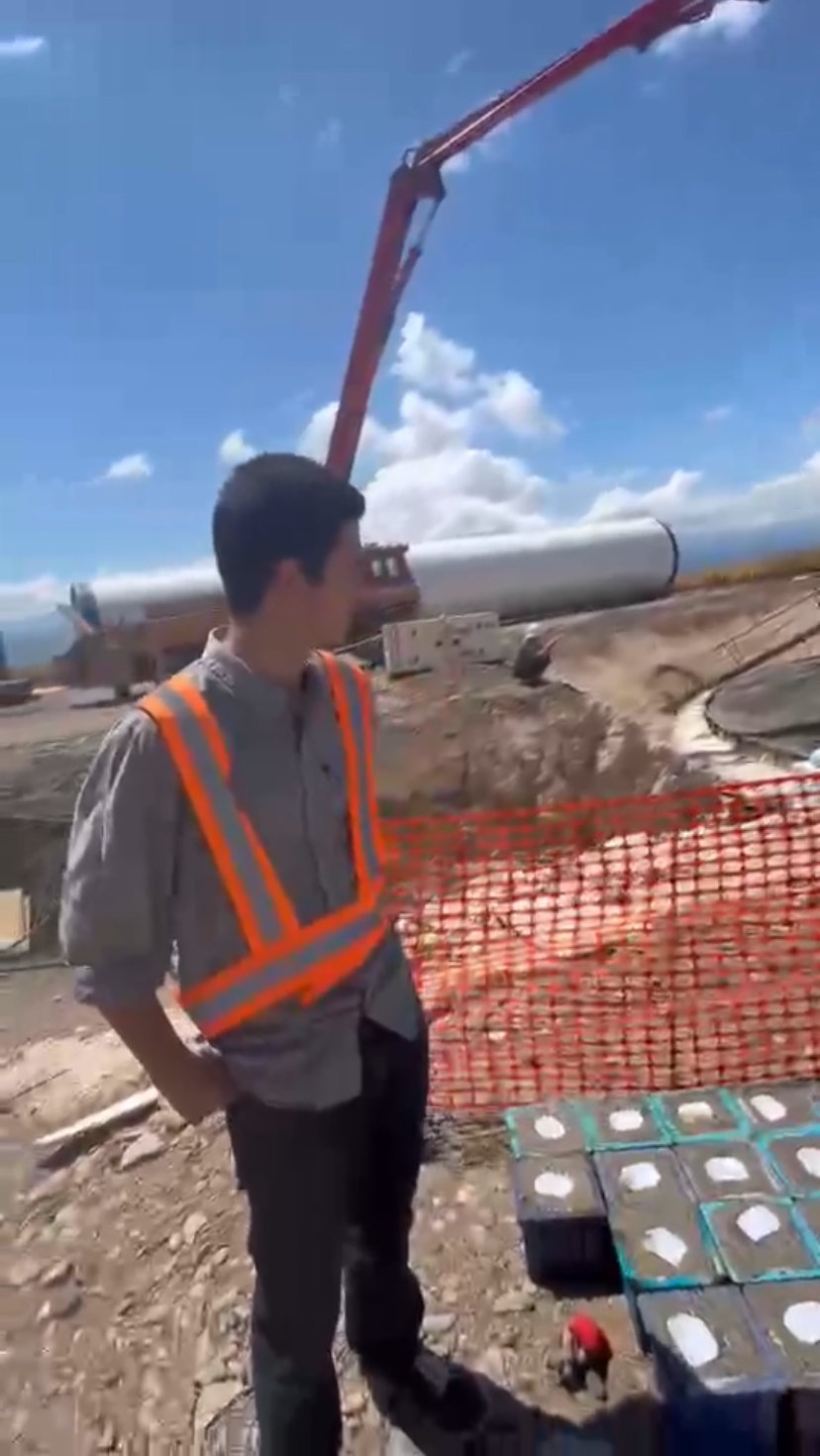
E-Commerce / AI
AI-powered fashion shopping assistant for the Georgian market. A scraped catalog aggregates real product listings — pricing, sizes, colors, images — from Georgian clothing and footwear retailers into a unified schema. Two AI-driven discovery modes: a Gemini-powered chat stylist that takes a natural-language request (e.g. "summer beige outfit under 400 GEL") and returns a complete matched outfit from the catalog with per-item reasoning and a running budget total, and a GPT-4.1 vision-based visual search that identifies brand, category, and keywords from an uploaded photo and searches the catalog for matching items. Fully localized (Georgian, English, Russian).
Research / Real-Time Engine Integration & Board Recognition
Built to study real-time chess engine integration and board-state recognition: how to reliably extract a live board position from a web page, feed it to a UCI engine, and present engine reasoning in a way a human can follow. Reads live board state from chess.com by attaching Selenium to a remote-debugging Chrome session, first attempting the page's internal FEN API and falling back to parsing individual piece DOM elements when the API isn't available. Runs Stockfish via python-chess at two strength levels simultaneously — an ELO-limited engine and a full-strength engine used to compute chess.com-style move-quality labels from centipawn loss, plus a heuristic "brilliant move" detector for near-best lines involving a material sacrifice. A Tkinter GUI renders the live board with move arrows and evaluation in real time.
Arduino, ESP32, ESP8266; I2C, UART, SPI protocols; sensor integration (IMU, GPS, ultrasonic, reed switches); servo control, motor drivers, relay switching
C/C++ (embedded), Python (automation, protocol analysis); state machines, closed-loop control, sensor fusion algorithms, event-driven logic
Power isolation, electrical design, circuit assembly; 3D printing (CAD design), mechanical integration; hardware debugging, signal conditioning
Vanilla JavaScript (event-driven logic, Canvas API, animation loops, Intersection Observer); HTML/CSS; ESP32 web server development
Designed and built multiple Arduino, ESP32, and ESP8266–based systems including autonomous robots, servo-driven mechanisms, IoT devices, and interactive OLED interfaces. Worked end-to-end on wiring, power management, sensor integration, mechanical design, and control logic.
Built Wi-Fi–enabled systems such as remote door locks, web-controlled vehicles, sensor-triggered automation, and notification systems using ESP32. Integrated hardware with web interfaces and focused on reliability, fail-safes, and real-world usability.
Developed a custom ESP8266-based network security learning tool and automation scripts to study Wi-Fi protocols, management frames, reconnection behavior, and password strength in authorized environments. Gained hands-on understanding of wireless security and defensive analysis.
Designed and prototyped physical systems using 3D printing, servos, sensors, and custom mounts. Focused on translating software logic into reliable physical motion and repeatable mechanical behavior.
Designed logos and brand visuals for startups and small businesses. Focused on clean, modern, tech-oriented identity.
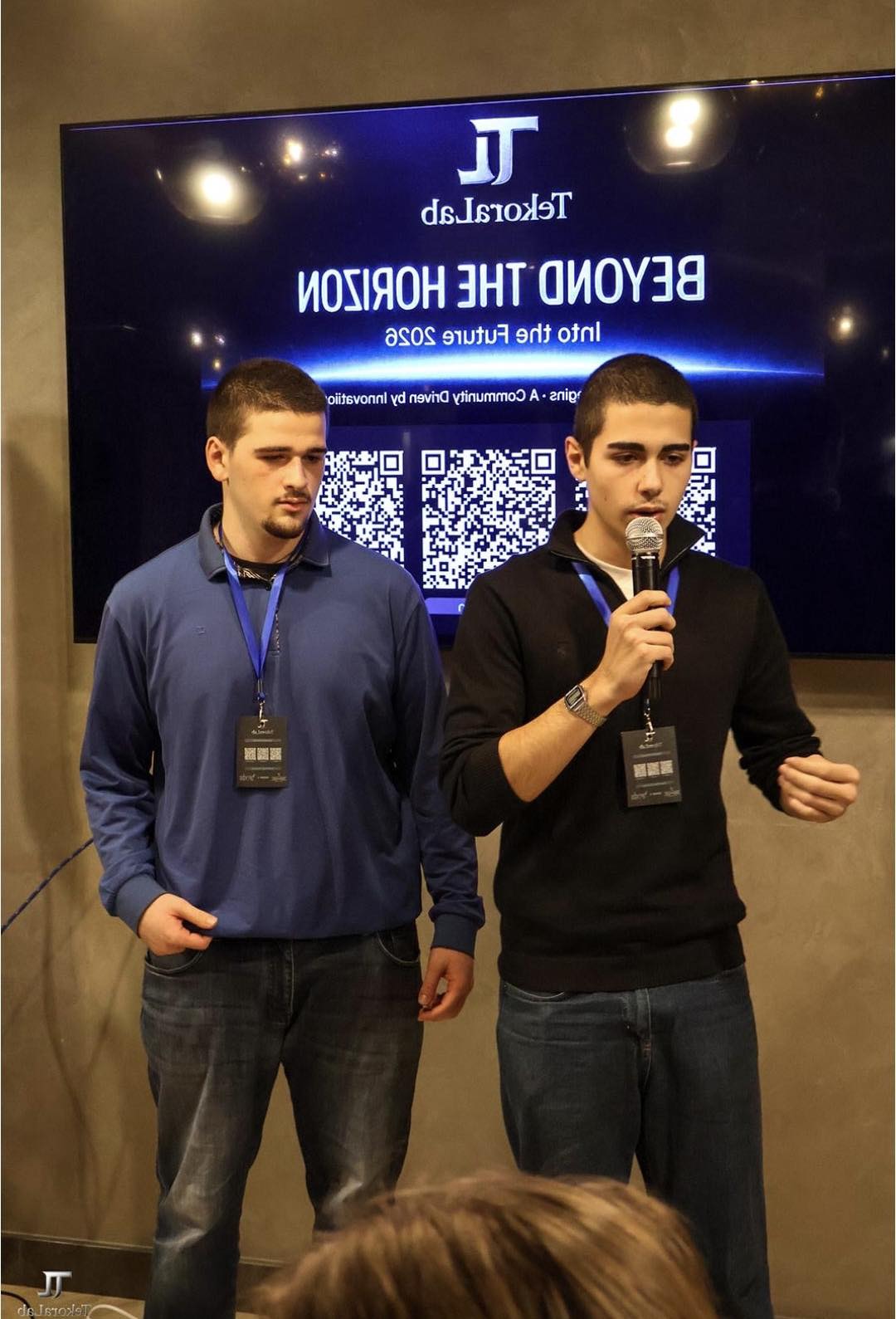
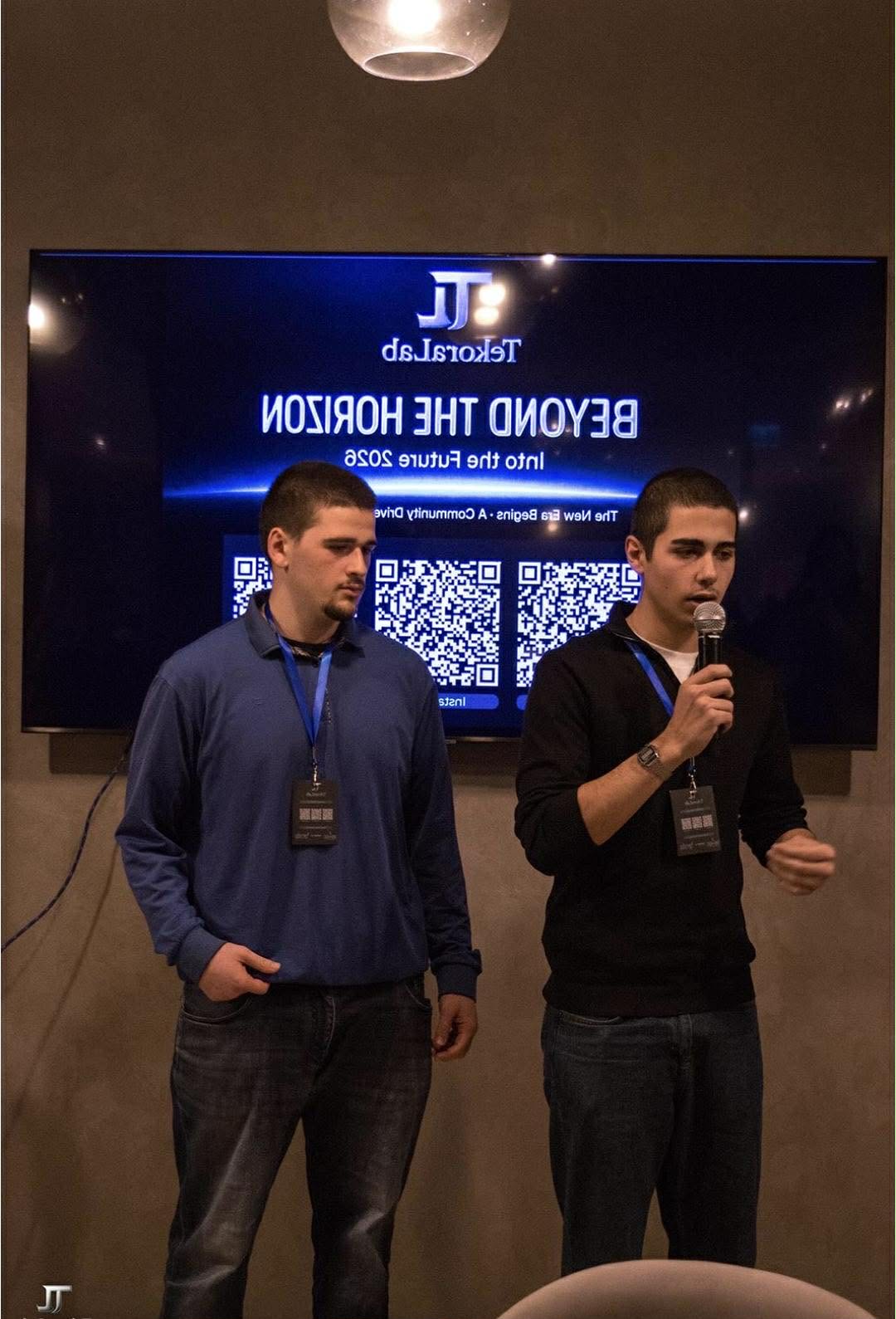
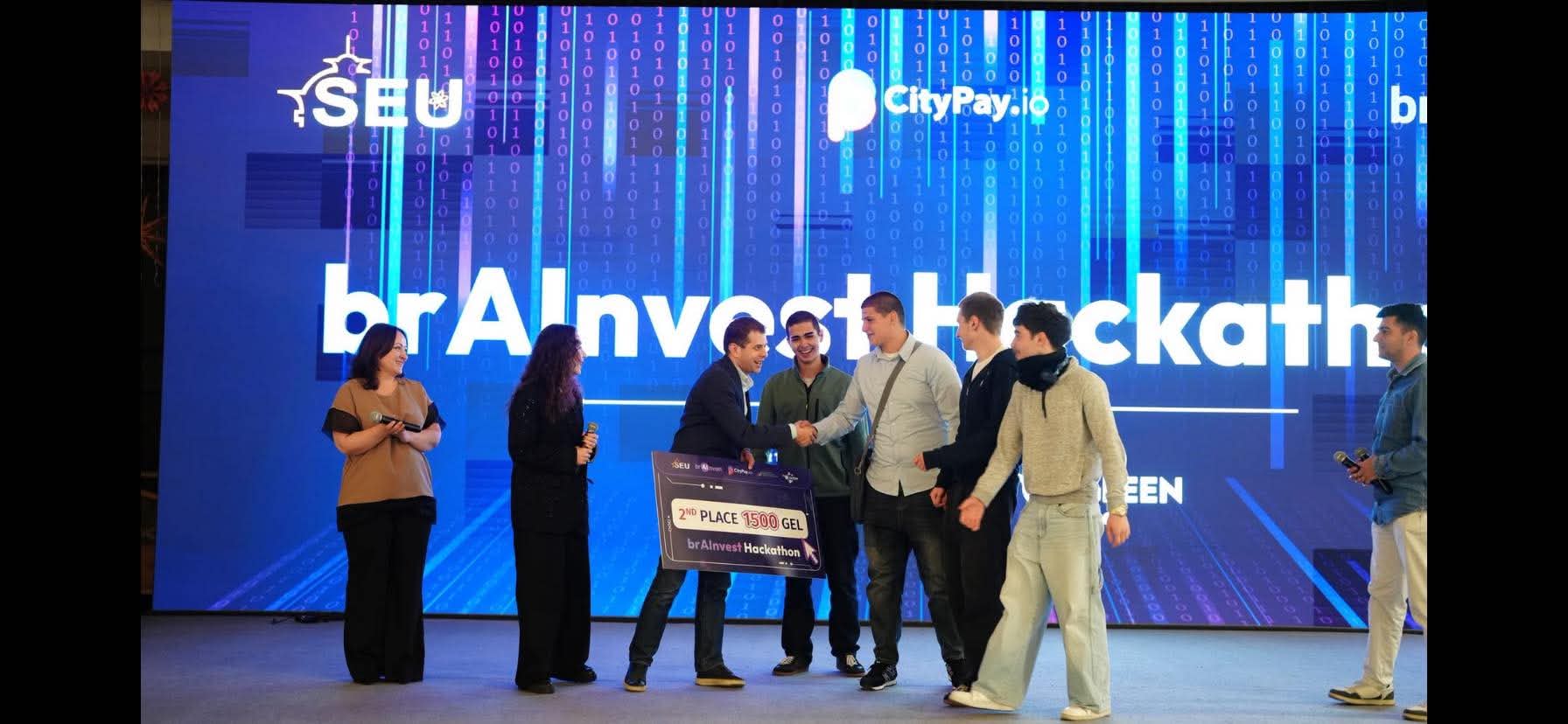
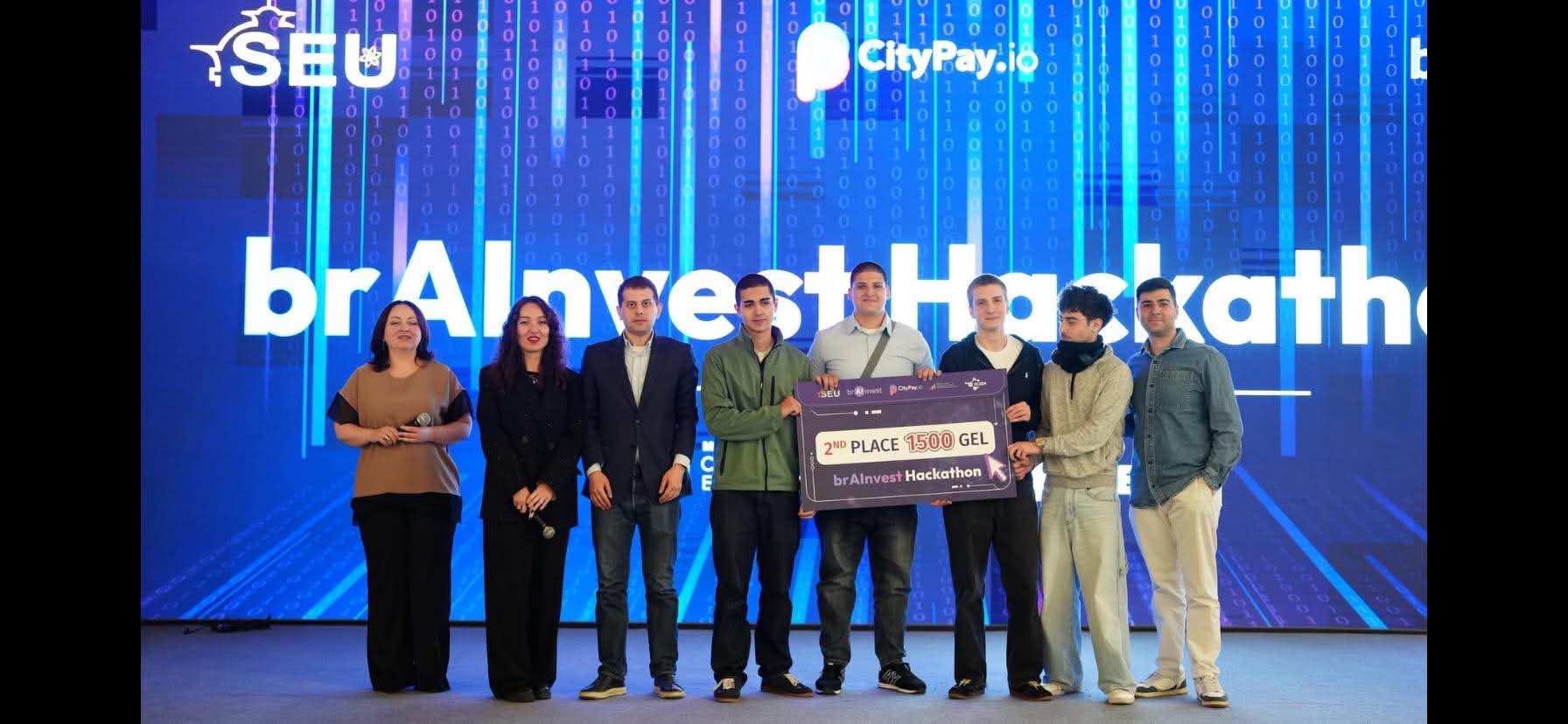
Showcased ResidentOS — B2B property management SaaS for Georgian apartment complexes — at the brAInvest Hackathon, presenting the product, problem space, and technical approach to judges and attendees. Finished 2nd place.
Embedded systems, control systems, and hardware-software integration. Primary interests: mechanical engineering (robotics, automation), electrical engineering (IoT, sensor systems), and theoretical nuclear engineering. Focus on building systems that translate software logic into reliable physical behavior.
11th-grade student (Georgia). Engineering-focused secondary education. Expected graduation: 2026. Preparing for Mechanical Engineering studies with emphasis on embedded systems and control theory.